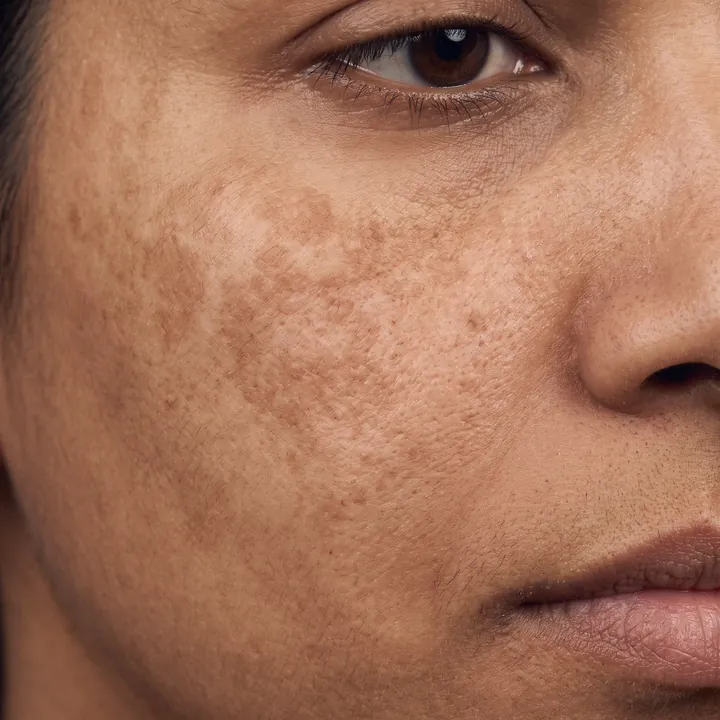
[01]
Melasma
Soft-edged brown patches on the cheeks and forehead, often linked to hormones
Usually · Laser toning + Depigmentation Protocol
Six laser sessions on Q-switch and Pico lasers. Your doctor plans them from a skin scan that shows how deep your pigment sits.
Brightening creams work on the top layer of skin. Pigment caused by sun, hormones or old acne can sit lower down, where creams can't reach. And as long as the cause continues, new pigment keeps forming.
A full face course is usually 6 sessions, 2 to 4 weeks apart: about 4 months. Your doctor sets the plan after your scan.
Most people have more than one type. Each type needs a different treatment, so your doctor identifies yours first.
Soft-edged brown patches on the cheeks and forehead, often linked to hormones
Usually · Laser toning + Depigmentation Protocol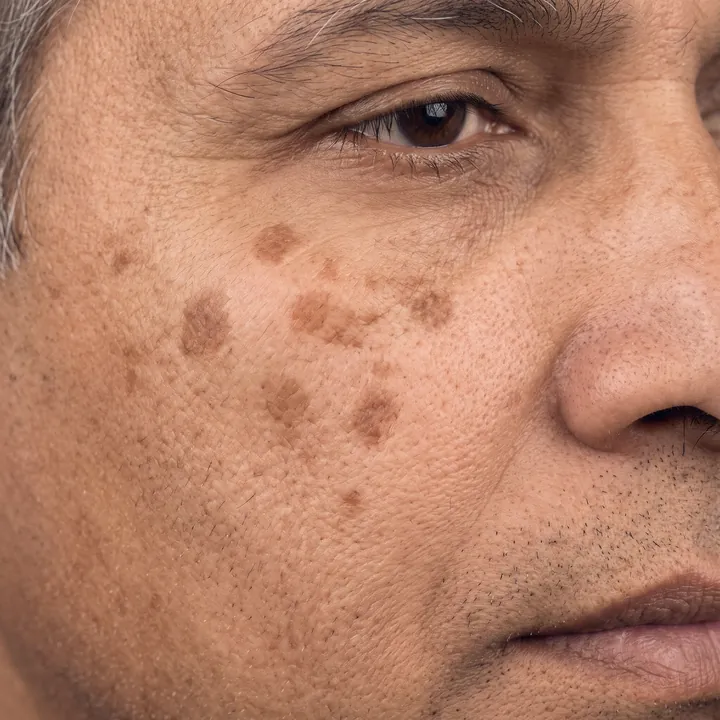
Flat, clearly outlined brown spots from years of sun
Usually · Spot laser: Q-switch or Pico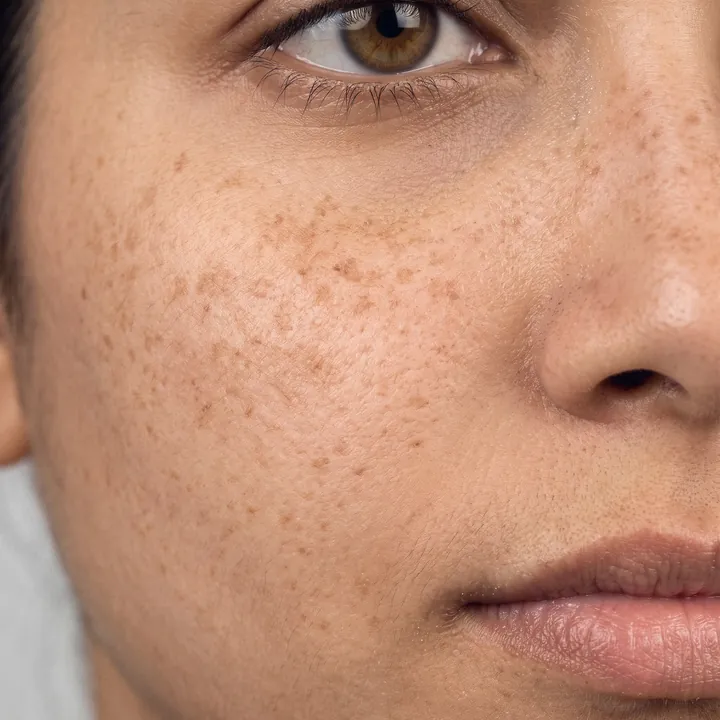
Small light-brown dots in clusters, close to the surface
Usually · Spot laser: Q-switch 532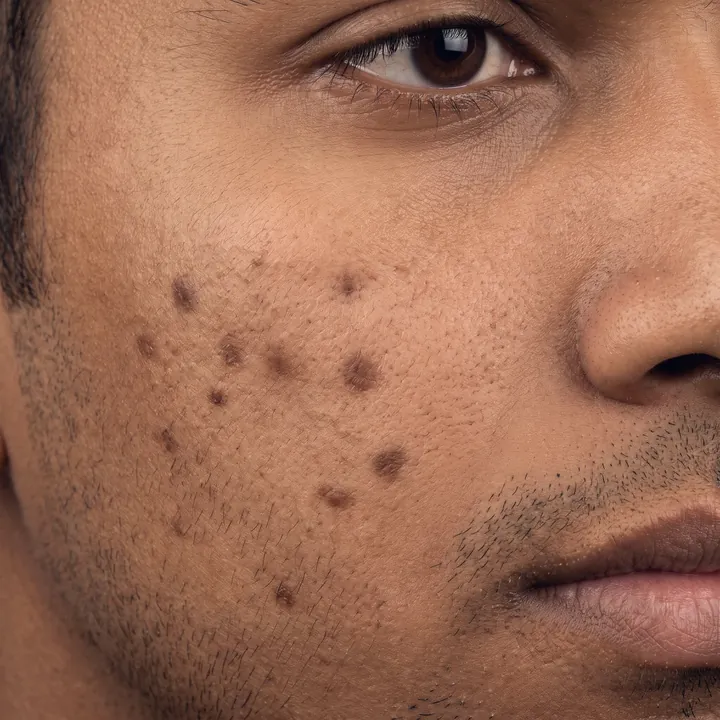
Flat dark marks left behind after pimples heal
Usually · Laser toning + peels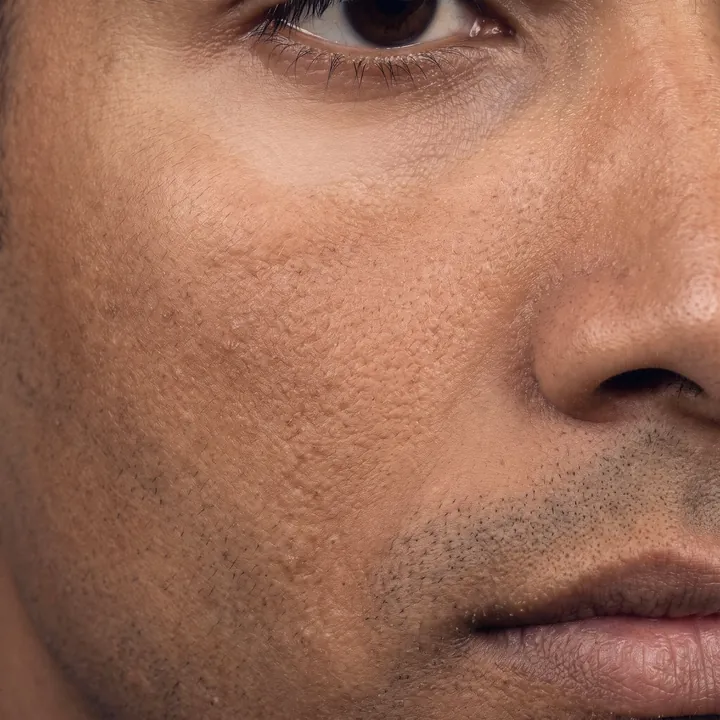
Skin darkened by the sun on the face, neck and arms
Usually · Peels + laser toning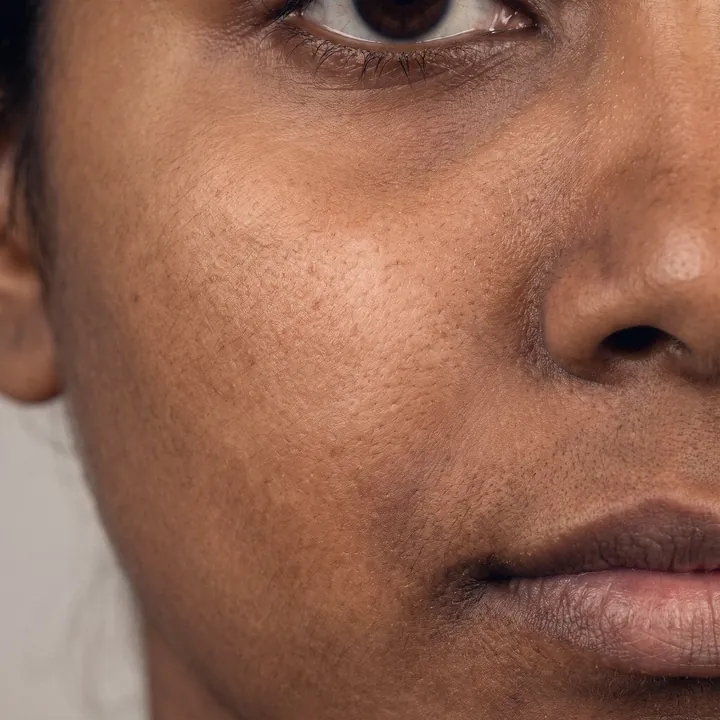
Some areas darker than others, often around the mouth, chin or eyes
Usually · Laser toning + Rx medifacial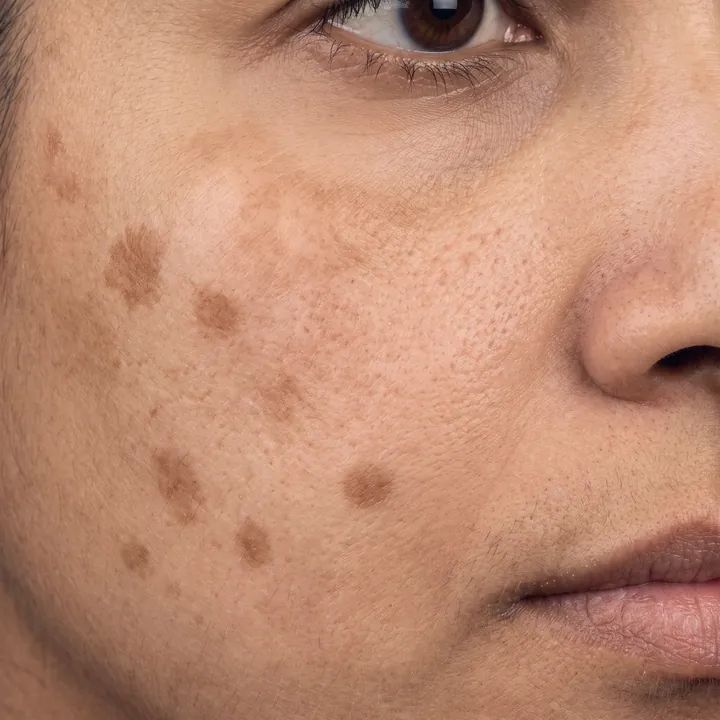 Most common
Two or more types on the same face, often at different depths. Your plan treats each one in the right order.
Usually · A combined plan, set by depthIllustrative close-ups, not real patients. Your doctor confirms your type at consultation.
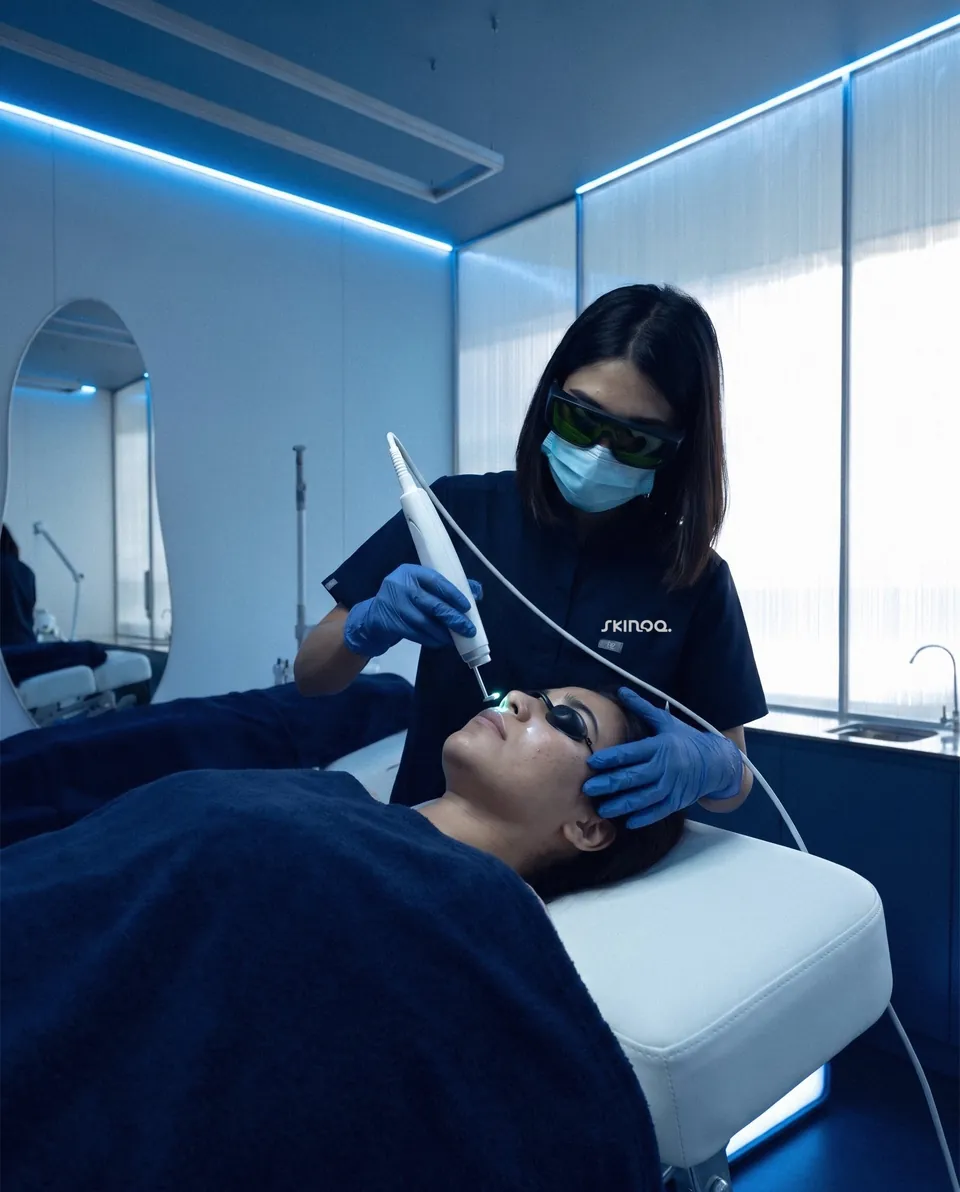
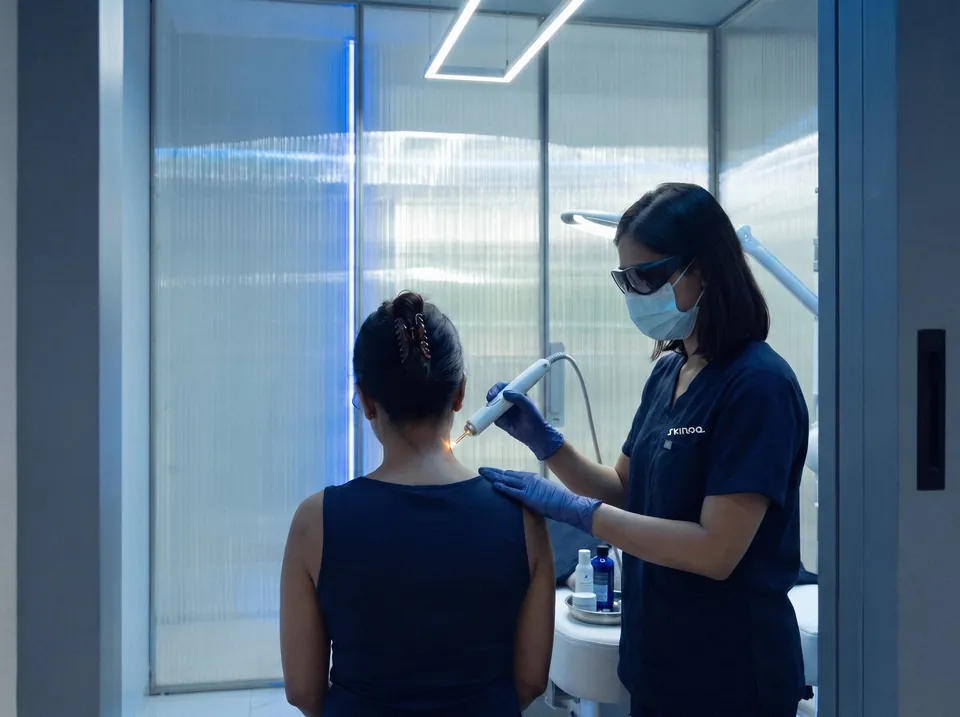
The Q-switch laser evens out skin tone with gentle, low-energy passes over the whole face. The Pico laser targets stubborn spots with extremely short pulses, so less heat reaches the skin around each spot.
Sun spots and freckles sit near the surface. Melasma and some older marks go deeper. How deep the pigment sits decides which laser and peel we use, and how many sessions you need.
Sun spots, freckles and tan in the top layer of skin. These usually need the fewest sessions.
Very short pulses break the pigment into tiny pieces that your body then removes.
Gentle passes over the whole face for melasma and patchy tone, at settings that keep heat low on Indian skin.
Every pigmentation plan follows a protocol written by Skinoq's surgeons, dermatologists and medical aestheticians. Trained therapists carry it out under a doctor's supervision.

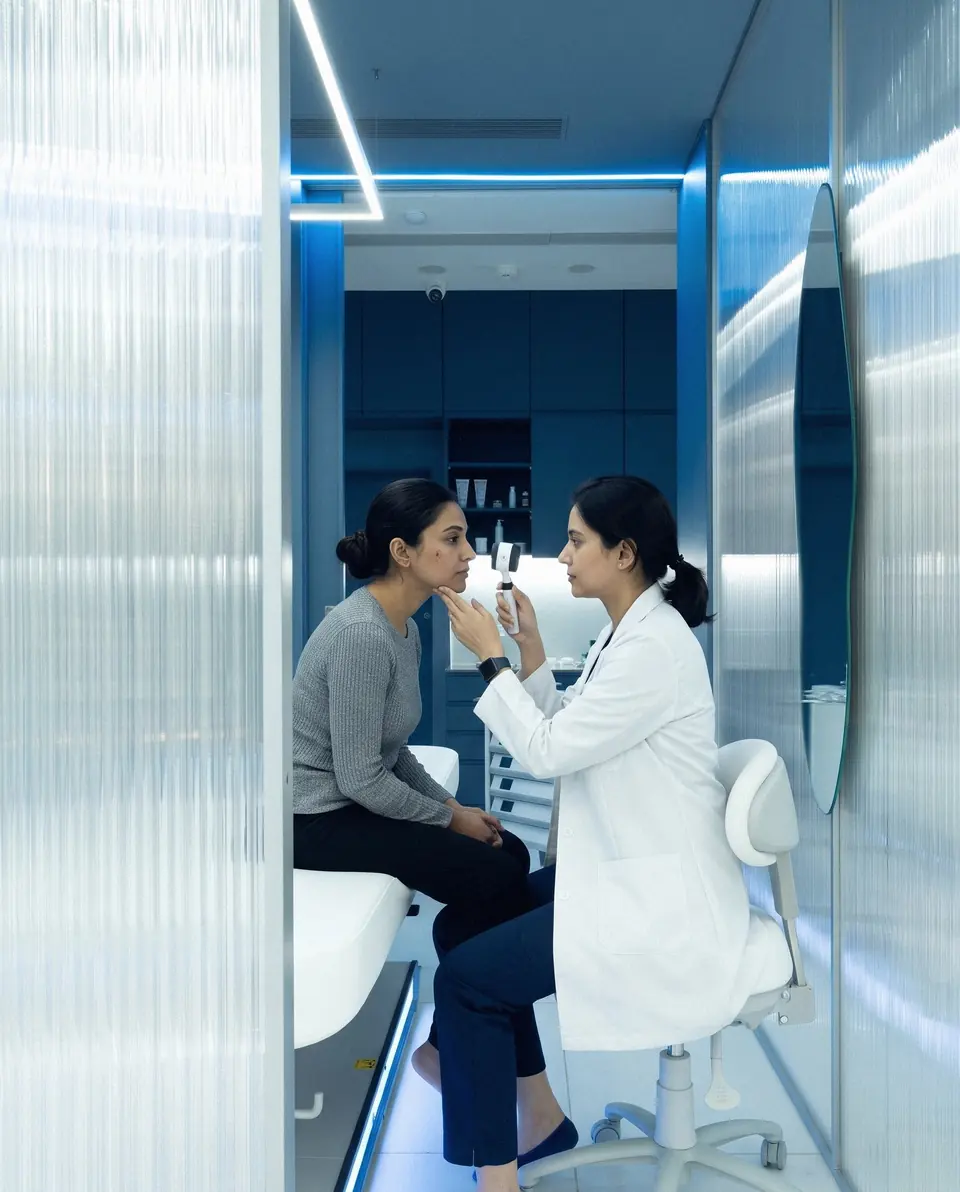
A detailed skin scan shows pigment that isn't visible to the eye yet: how much there is, how deep it sits and where it is spreading. Your plan is based on that scan.
Sample report for illustration. Your readings are taken at consultation.
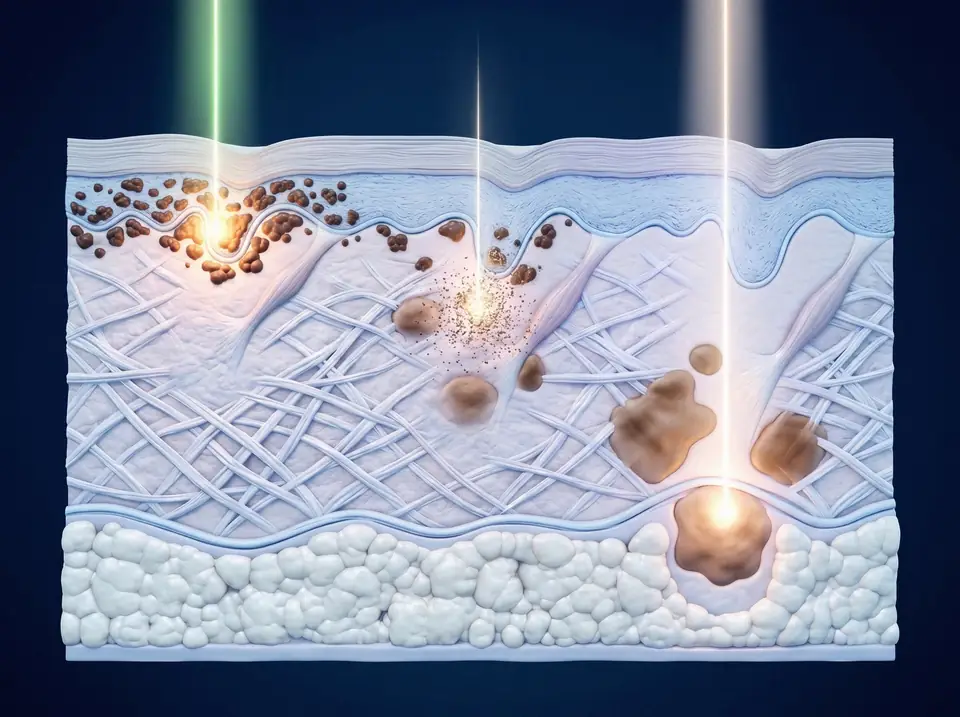
Laser light breaks pigment into tiny pieces, and your body removes them over the next few weeks. Medical peels help by removing darkened cells from the surface.
The laser sends a beam of light into the skin. Dark pigment absorbs the light, while the skin around it lets it pass through.
The absorbed light heats the pigment for a split second and cracks it into tiny pieces. Pico breaks it finer; toning breaks it down over several sessions.
Over the next 2 to 4 weeks, your body's clean-up cells collect the pieces and carry them away. The spot fades gradually.
Diagrams for illustration. Not to scale.
Your skin can make new pigment whenever something triggers it. The three common triggers are below. Keeping them under control is what keeps your result.
Pigmentation is often treated with a brightening facial or one laser setting used for everyone. Your result depends on knowing the type and depth of your pigment, and treating it in the right order.
A quick look at your skin
Not identified
One laser, one setting
High settings for quick visible change
A cream from the counter
Not measured
Single sessions
 Skinoq Pigment
Pigment Map scan and doctor exam
Surface, deep or mixed, named in your plan
Q-switch and Pico, matched to each spot
Gentle settings that lower the risk of darkening after laser
A prescribed plan with daily SPF
Photographed and reviewed every visit
A planned course with measured progress
The same process runs at Piplod, Pal and Bodakdev, from your first scan to your last session.

A doctor examines your skin, runs the scan and writes a plan with the full cost, before you commit.

Prescribed home care and daily sunscreen get your skin ready, so it responds evenly and is less likely to darken after treatment.
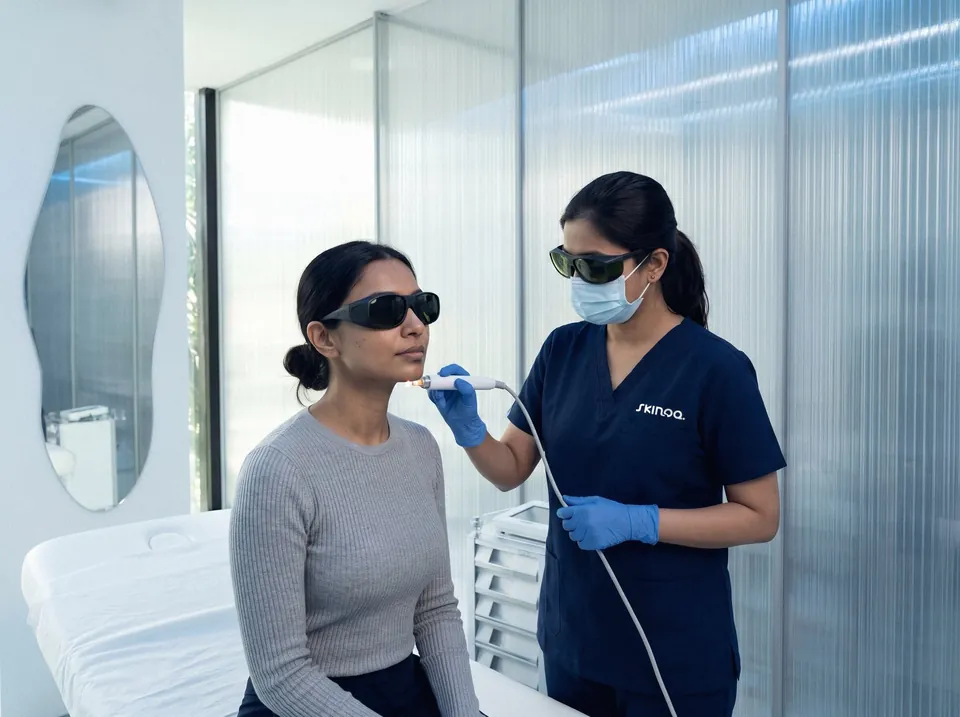
A small area is treated first to check how your skin reacts before the full session.
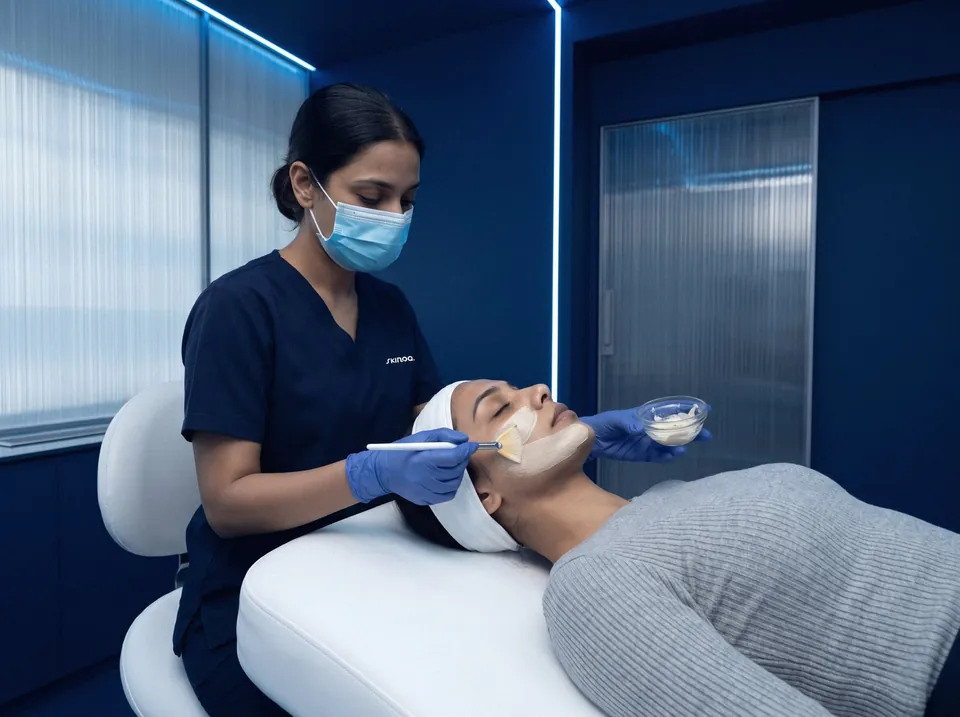
Laser toning with a medical peel or Rx medifacial, every 2 to 4 weeks. Any mild redness usually settles within a few hours.

Photos and scans are compared at each visit, and the plan changes as pigment lightens.
Tan and dullness fade first. Some spots turn darker for a few days, then flake off.
Sun spots and freckles become clearly lighter. Acne marks start to fade.
Melasma and older marks respond more slowly, and keep improving between visits.
Daily sunscreen and a top-up session every few months stop pigment from coming back.
Illustrative. Response varies with pigment type, depth, skin type, hormones and sun exposure.
Get my session estimateThe same areas are photographed and scanned at every visit, so you see your pigment index fall and your doctor adjusts the plan as it does.
Sample client record for illustration. Individual results vary.
Same angle, same light, at session 0 and after the course, with the sessions it took.
Drag the handle to compare before and after.
Shared with client consent. Results vary with pigment type, depth, skin type and sun exposure.
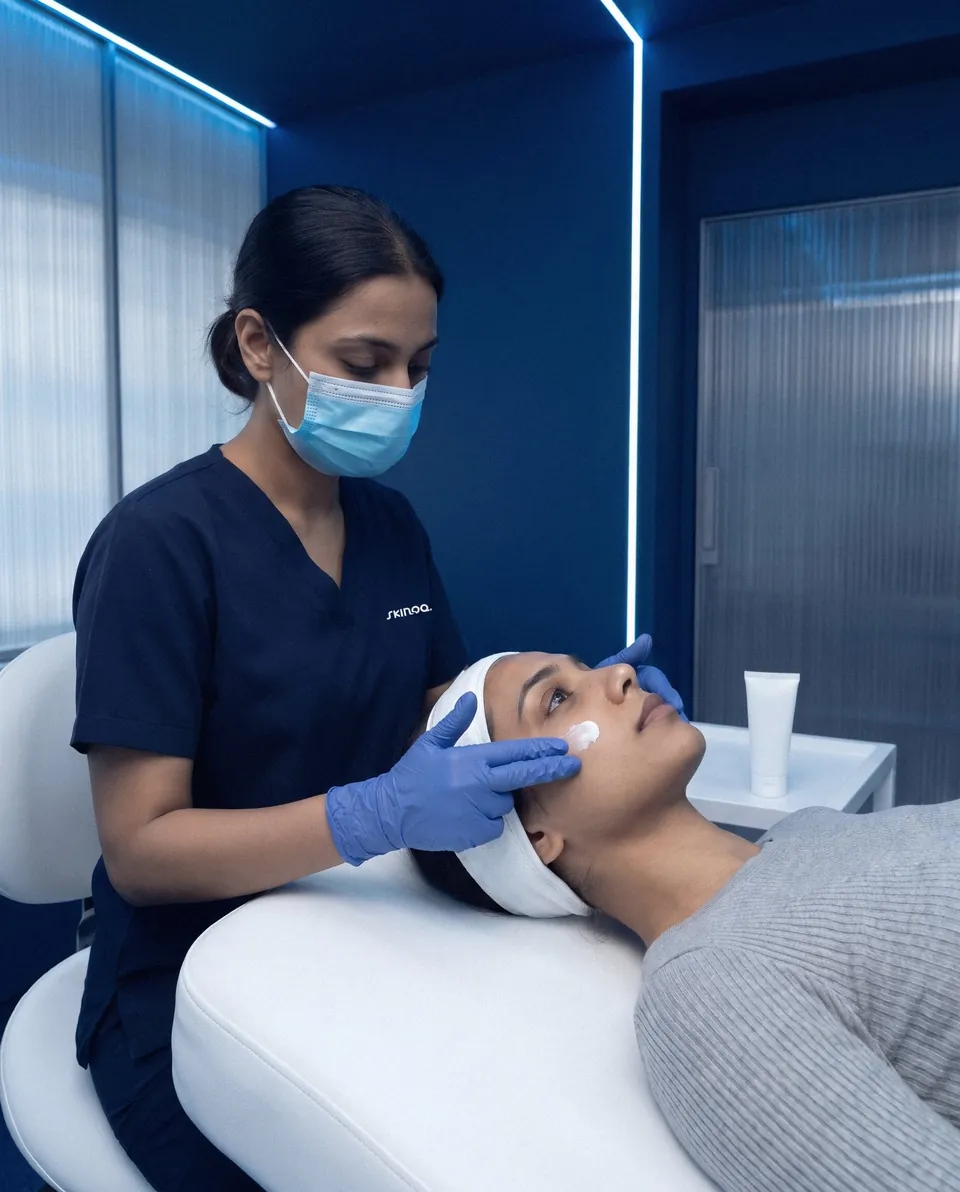
Before you leave, your therapist applies SPF 50 and gives you a written aftercare plan. Most people go straight back to work. Daily sunscreen between visits is what stops new pigment forming.
[Real Google review 1: appears automatically once the Google Places API key is set in env.php]
[Real Google review 2: appears automatically once the Google Places API key is set in env.php]
[Real Google review 3: appears automatically once the Google Places API key is set in env.php]
[Real Google review 4: appears automatically once the Google Places API key is set in env.php]
[Real Google review 5: appears automatically once the Google Places API key is set in env.php]
[Real Google review 6: appears automatically once the Google Places API key is set in env.php]
Dark skin caused by rubbing, shaving, hormones or sun is checked first, then treated with peels and laser toning set for thicker body skin.
Shaving, waxing, deodorant
Rubbing, sun, hormones
Pressure and rubbing
Friction, tight clothing
Sun and old acne marks
Sun spots, age spots
Your doctor reviews rubbing and shaving habits too, so the darkening doesn't come back.
Most plans combine two or three of these. Your doctor picks the mix after your scan.
Gentle Q-switch passes over the whole face to even out tone.
For · Melasma · tan · uneven toneA focused Q-switch beam on each brown spot. Also used for freckle removal.
For · Sun spots · frecklesUltra-short pulses that break stubborn pigment into finer pieces.
For · Stubborn and mixed spotsA thin carbon layer is lifted off with the laser, clearing dull, oily skin.
For · Tan · dull skin · open poresA doctor-prescribed facial with active ingredients for pigment.
For · Uneven tone · upkeepRetinol, TCA and brightening peels remove darkened surface cells.
For · Acne marks · tanAn in-clinic treatment followed by a home stage that keeps pigment down.
For · Melasma · stubborn patchesPeels and laser toning set for thicker skin on the body.
For · Underarms · neck · kneesIndividual treatments are priced in your plan at consultation.
Each package combines the treatments that suit one concern, booked as a course so every session builds on the last. Package prices are 30% below our per-session rates.
For sun spots and freckles
Q-switch spot laser on the affected half of the face, every 4 weeks.
For tan, dullness and uneven tone
Rx pigment medifacial with laser toning at every visit.
For acne marks and mixed pigmentation
Rx pigment medifacial with laser toning at every visit, reviewed against your scan.
For stubborn spots and deeper marks
Q-switch laser, medifacial and a peel in the same visit, so surface and deeper pigment are treated together.
Your doctor builds a package around your scan, including the Skinoq Depigmentation Protocol or body brightening where needed. You get the full price before you commit.
Book a consultationPrices exclude 5% GST. Your doctor confirms which package suits your skin at consultation.

You leave knowing your pigment type, how deep it sits, how many sessions it needs and the full cost, before you commit.
9:30 AM to 7:00 PM, all days. One medical protocol at each.
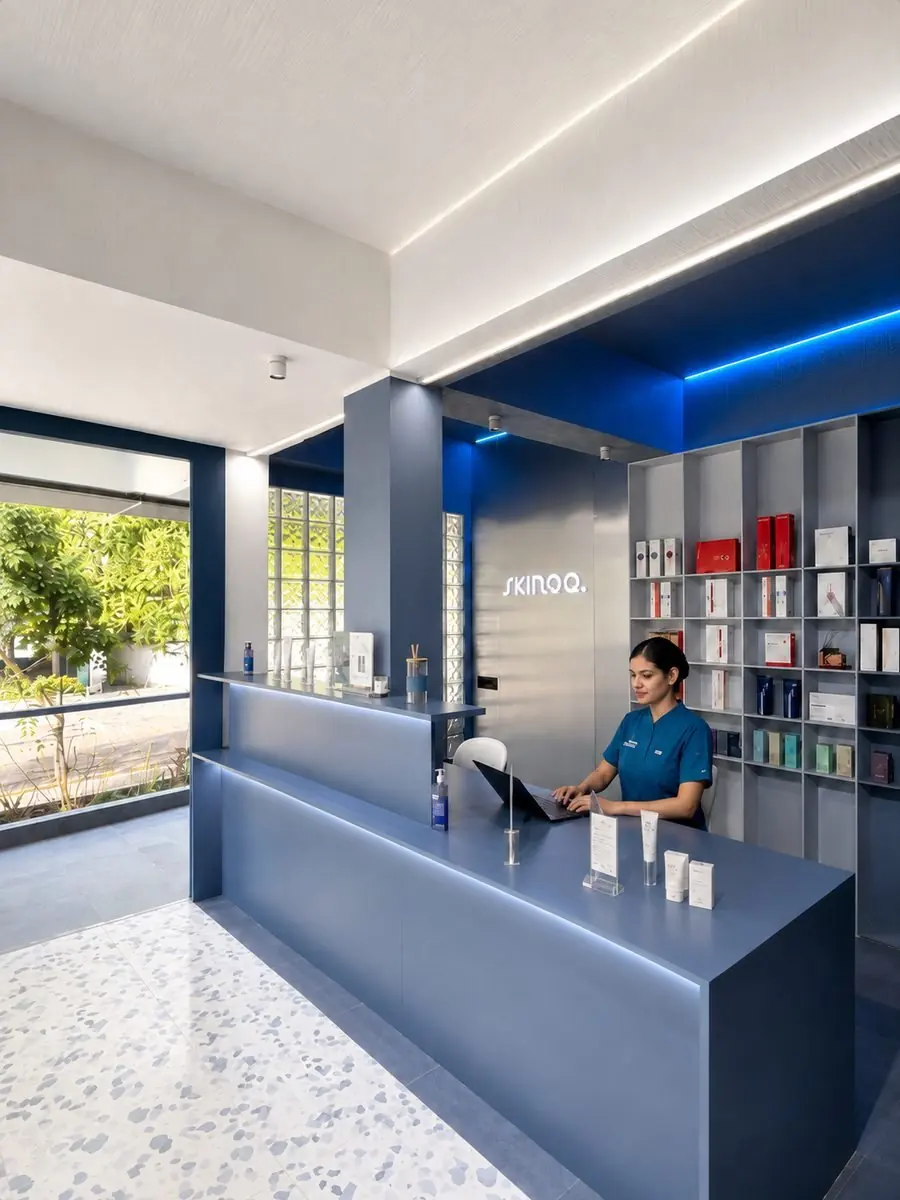
9:30 AM to 7:00 PM, all days.